

🌍 Contextual Clarity: Why This Matters Now
As we navigate a world marked by uncertainty, polarisation and power struggles—across geopolitical, organisational and personal spheres—the question of how we engage in disagreement becomes more critical than ever. In boardrooms and back-to-back meetings, personal agendas and siloed thinking are increasingly surfacing. Boundaries are pushed, intentions questioned, and emotional reserves depleted.
So we must ask ourselves:
Am I showing up to be right, or to do the right thing?
The difference, subtle as it seems, is deeply consequential.
Be Clear on Your Endgame
When your destination is clear, you navigate disagreement differently.
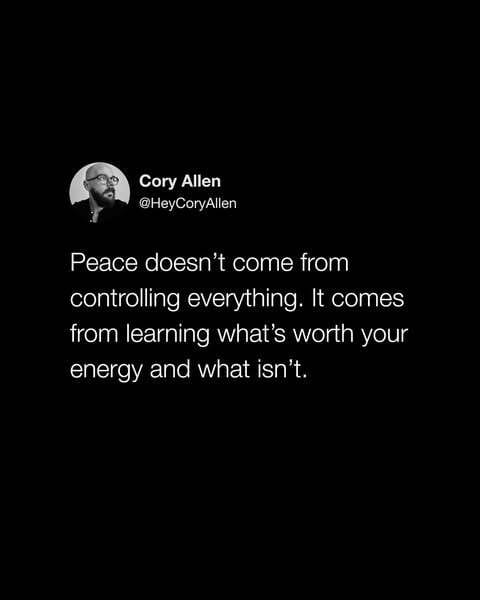
You begin to see that not every provocation is an invitation.
You stop fighting every battle and instead build credibility over time.
You learn that the most influential people in the room aren’t necessarily the loudest—but they are often the most intentional.
Sometimes, yes, you must “do the dance” to achieve the desired outcome—particularly in systems that aren’t optimally designed for innovation, equity, or truth. That isn’t compromise. That’s emotional intelligence at work.
🧵 Crucial Conversations & Constructive Disagreement
At a private lecture at Harvard, the Women’s Leadership Board was introduced to Professor Julia Minson’s research on the psychology of disagreement. Her work examines why disagreement feels threatening, and how we can become more open to perspectives that challenge our own.
Here are three takeaways from her lecture:
“The illusion of explanatory depth”
We often believe we understand our own views far better than we actually do. Disagreement exposes that illusion—and forces us to re-examine what we think we know.“You don’t have to agree to understand”
Her research shows that taking the time to accurately summarise the other person’s viewpoint—even if you still disagree—leads to more open, less defensive conversations.And the biggest one for me
3. Acknowledging disagreement builds credibility”
Ironically, people trust you more when you show that you’ve considered alternative viewpoints—even when you ultimately reject them.
It’s not you, it’s them
In coaching conversations, clients often begin with the external:
“They’re being difficult.”
“My manager is micromanaging.”
“This team is toxic.”
Sometimes, that’s true. Sometimes it’s not you—it’s definitely them.
A toxic environment. An insecure leader. A peer whose values are fundamentally misaligned. And no amount of eloquence or diplomacy will “fix” it.
You may be experiencing resistance because:
You’re competent, and that unsettles someone
You operate in a way that challenges outdated norms
You unintentionally trigger insecurity
You took their favourite cup from the kitchen ☕
Workplace conflict is rarely about the visible issue. More often, it’s about perception, power, and emotion.”
💼 Lessons from My Career: Moments That Tested Me
I’ve led many teams and navigated highly sensitive projects—environments thick with tension and competing agendas. And when the pressure rises, people revert to their default behaviours. The masks slip. Clarity comes, often painfully.
Two of my most challenging moments:
1️. Fly Red – Commercial Strategy During the Pandemic
Leading the operational and sales ramp-up at the height of uncertainty. The stakes were high, the ambiguity relentless, and the pressure intense. It should have been called “Seeing Red.” It was, without doubt, the most stressful piggy-in-the-middle project I’ve ever led.
2️. Joint Venture Negotiations – Four Airlines, Four Cultures
Commercial negotiations across a vast transatlantic joint venture. Four different companies. Four cultural frameworks. Conflicting motives. A masterclass in navigating egos, legal complexity, and organisational diplomacy.
What I Learned
These experiences stretched and transformed me.
I learned to depersonalise the dynamics.
To recognise that egos, legacies, and structural tensions often have little to do with me, even when I am directly impacted.
I began to lead less from reactivity, and more from intention.
I no longer needed to win every point—I focused on moving the system, the project, the people forward.
Questions I had to repeatedly ask myself: Did I want to win this battle, or do I want to win the war?”
That doesn’t mean silence.
It means strategy.
⚖️ When to Step In, and When to Step Back
When tensions run high, it is critical to:
Take a moment.
Reassess motives—yours and others’.
Step away, if needed, to regain clarity.
Tiredness and pressure blur judgment.
And while the temptation is to power through, sometimes the smartest move is to pause. Tap out. Reflect. Then re-enter with fresh perspective and strategy.
Reflective Prompts for the Week Ahead
Grab a journal, voice note yourself, or just sit with these today:
Where in your work or life are you being pulled into unnecessary battles?
Whose agenda are you truly serving when you “prove” your point?
Is your response aligned with your bigger picture?
How often do you step back to check your motives against your outcomes?

Some Resources to support you:
Final Thoughts
We are living through times that demand courage and compassion.
Being “right” may offer short-term satisfaction.
But doing the right thing—even when it costs—builds credibility, trust, and influence over time.
Your presence in a room should not just shift dynamics—it should elevate the conversation.
And that often starts with knowing which conversations are worth having.
With Peace, Love and Determination

P.S. If there is anything in particular you would like to hear about in these newsletters, please feel free to reach out and ask!
💜 This Week
I have been in Boston on my AI Education journey and learning about the importance of having Gender-balanced input. Trying to figure out whether the risks are worth it in developing an AI Twin (current answer in no) and working through the complications of academia right now as we continue to pursue a future of equity for all.
It has been a tough one.
Highlights from the Women In Power Conference at the Kennedy School to come next week.

